

The announcement comes days after the Blur team said it would also shut down Blast, its Ethereum layer-2 blockchain, because it cost more to run than it earned.
Blur NFT marketplace to shut down
Blur, the NFT marketplace that overtook OpenSea in trading volume shortly after its 2022 launch, announced it will shut down its website in a month. They also announced that Blend, Blur's NFT lending platform, will stop matching new loans on the same day. Borrowers have until then to repay their loans or let them default.

At least $86 million stolen via tampered Ledger hardware wallets resold by CryptoBilis
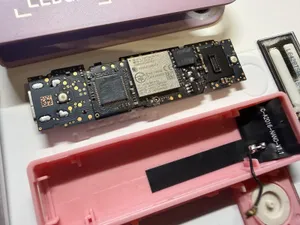
The users of more than 300 Ledger cryptocurrency wallets have suffered an estimated $86 million to $93 million in losses after thieves drained assets across blockchains including bitcoin, Ethereum, and Tron. Ledger is a popular manufacturer of hardware wallets — a type of physical, offline device used to store cryptocurrency keys in an attempt to be more secure than storing keys on Internet-connected devices.
Ledger has claimed that the targeted wallets appear to have been sold via CryptoBilis, a Southeast Asian reseller that operates in Indonesia, Malaysia, and the Philippines. Ledger said that at least one affected device "contained an unauthorized hardware implant". Several third party researchers disassembled affected hardware devices, finding that a chip and antenna had been added to capture crypto wallet seed phrases and transmit the data to the attacker using a cellular connection.
Pudgy Penguins company shuts down its Abstract blockchain after losing "8 figures" running it

Igloo, the company behind the Pudgy Penguins NFTs, announced it will shut down Abstract, its Ethereum layer-2 blockchain, on December 15. CEO Luca Netz said the company had lost "8 figures" in the less than two years they were running the chain.
Users have until December 15 to move their assets, after which anything left on the chain will become inaccessible. DefiLllama estimates there were around $76 million in assets on the chain when the shutdown was announced, leading some users to complain that the wind-down period is too short.
The shutdown comes a few months after Igloo shut down its Pudgy Party mobile game, which had dropped to around 200–300 active users shortly after its launch, and also lost the company millions of dollars.
Blur shuts down its Blast blockchain
Blast, the Ethereum layer-2 created by the team behind the Blur NFT marketplace, is shutting down less than three years after launch. In the announcement, they disclosed that its costs now exceed its revenue and that it sees "no credible path" to fixing that. Despite once boasting of more than $2 billion in total value locked in June 2024, generating revenue from network usage of around $3.5 million, that revenue has collapsed to less than $2,000 last month.
Porsche shuts down its NFT project with the floor price down 96%

When Porsche announced its Porsche 911 NFT project at Art Basel Miami in 2022, it promised holders "he opportunity to co-create Porsche's future in the Web3 universe". Turns out there wasn't much to that future.
After bungling the mint, selling fewer than 2,000 of the planned 7,500 NFTs after buyers balked at the 0.911 ETH (then $1,490) pricetag, the price went nearly exclusively downhill. Now, with the NFTs floundering with floor prices down 96% from launch, Porsche has announced it is ending its "shared adventure".
Near Intents exploited for $3.8 million, recovers all assets

Near Intents, a cross-chain swap service, halted operations after an attacker drained around $3.8 million by exploiting a bug in its Omni layer.
The next day, Near Intents posted addresses for returning the funds and threatened the attacker: "We have identified you, sir." The attacker returned everything the next day, in a transaction that included an on-chain message saying "We've returned all the funds, we were in the wrong". Near Intents confirmed the funds were returned, and said they were stopping their investigation.
Abracadabra proposes winding down after string of hacks years ago left each $1 "stablecoin" token backed by $0.04 in reserves

Abracadabra, the defi project behind the Magic Internet Money (MIM) stablecoin, is shutting down. It blamed its string of hacks: $6.5 million theft in January 2024, $13 million in March 2025, and $1.8 million in October 2025, which altogether left about $21 million in bad debt. According to the shutdown proposal, 22 million MIM are in circulation, backed by just $900,000 in "actionable backing" which puts the supposedly dollar-pegged token at about $0.04. Two wallets voted on the proposal.
In June, a similarly low-participation vote handed "stewardship" of the project to a different group which promised to "revitalize" Abracadabra. Days later, treasury wallets sold around $500,000 worth of MIM. In July, the project tweeted that a roadmap to restore the peg was "coming this week," then never posted again. A week after that tweet, Abracadabra-controlled wallets moved about $8.3 million in treasury assets with no explanation, some of it to a Binance deposit address, in what one commentator called "treasury looting". The wind-down proposal doesn't mention the $8.3 million or count it toward what MIM holders could redeem.
Magic Eden users lose NFTs and $1.8 million in wETH to legacy approvals exploit

Exploiters took advantage of a legacy approvals bug in an old payment processor called Limit Break, which the platform had stopped using in late 2024. The bug affected listings on Magic Eden's EVM marketplace, which the company had shut down earlier this year. The attackers were able to steal numerous NFTs, including 10 Meebits, 50 Otherdeeds, 10 World of Women, and 235 Desperate Apewives. Attackers also subsequently stole 660 wETH (~$1.78 million).
A whitehat rescue spearheaded by blockchain researcher 0xQuit took control of 23,155 NFTs he estimated to be worth "north of $5.7M USD", which he said would be returned to their owners after they revoked the permissions that made the assets vulnerable to theft.
Meter token prices crash after unauthorized mint

An exploiter was able to mint unbacked wrapped MTR and MTRG tokens, notionally priced at more than $2.3 million. They sold some of the tokens on a decentralized exchange, crashing the MTRG price by more than 88%. The price of the project's MTR token — which is supposed to maintain a stable price based on the cost to produce 10 kWh of electricity — also plummeted by approximately the same percentage. Meter has attributed the exploit to a "block validation flaw".
Meter paused the blockchain and bridge, and has urged people not to trade the token. They have warned that "Transactions after block 100731417 may not be honored", suggesting they are considering a blockchain rollback.
Meter suffered another bridge attack in February 2022, which amounted to $4.3 million.
Payy Network bridge fully drained of $1.8 million

The Payy Network, a stablecoin infrastructure company, disclosed that a bridge contract had been fully drained of funds, netting attackers $1.8 million. They later stated that the theft was "NOT a compromised key, social engineering or exploit of our off-chain infrastructure," but has not disclosed what it was. They also announced that the stolen funds were "users' non-custodial deposits to Payy Network / Payy Wallet", which is somewhat of an oxymoron.
Payy Network has halted all activity following the attack.